
Reclaiming the Legacy: Social Equity and the Future of Cannabis in LA
How communities are fighting to secure their place in the industry they helped create
After decades of criminalization, the legal cannabis industry arrived in California like a gold rush. But for the communities that had borne the weight of prohibition, legalization brought a painful irony: the same activity that had sent neighbors to prison was now making strangers rich.
Social equity programs represent an attempt—imperfect but essential—to correct this imbalance.
The Promise of Proposition 64
When California voters passed Proposition 64 in 2016, legalizing recreational cannabis, the measure included explicit language about equity. It acknowledged that the War on Drugs had disproportionately harmed certain communities and directed that licensing and revenue should help repair that damage.
Los Angeles, home to the largest cannabis market in the world, took this mandate seriously—at least on paper. The city's Social Equity Program, launched in 2018, aimed to provide pathways into the legal industry for those most impacted by prohibition.
Eligibility was tied to real markers of harm: cannabis arrests, residence in neighborhoods with high rates of cannabis enforcement, and low income. The idea was simple—those who paid the price should have first access to the opportunity.
Barriers to Entry
The reality has been more complicated. While the Social Equity Program created a dedicated licensing track, applicants quickly discovered that legal cannabis requires more than a license. It requires capital—often hundreds of thousands of dollars for real estate, buildout, inventory, security, and compliance.
Most social equity applicants didn't have access to that kind of money. Banks, still wary of cannabis at the federal level, wouldn't lend. Traditional investors sought safer bets. And the communities that had been systematically disinvested for decades had little generational wealth to draw on.
The result was a two-tiered system: social equity applicants held licenses they couldn't afford to activate, while well-funded operators from outside the community—many from outside California entirely—opened shop.
Community Spaces as Anchors
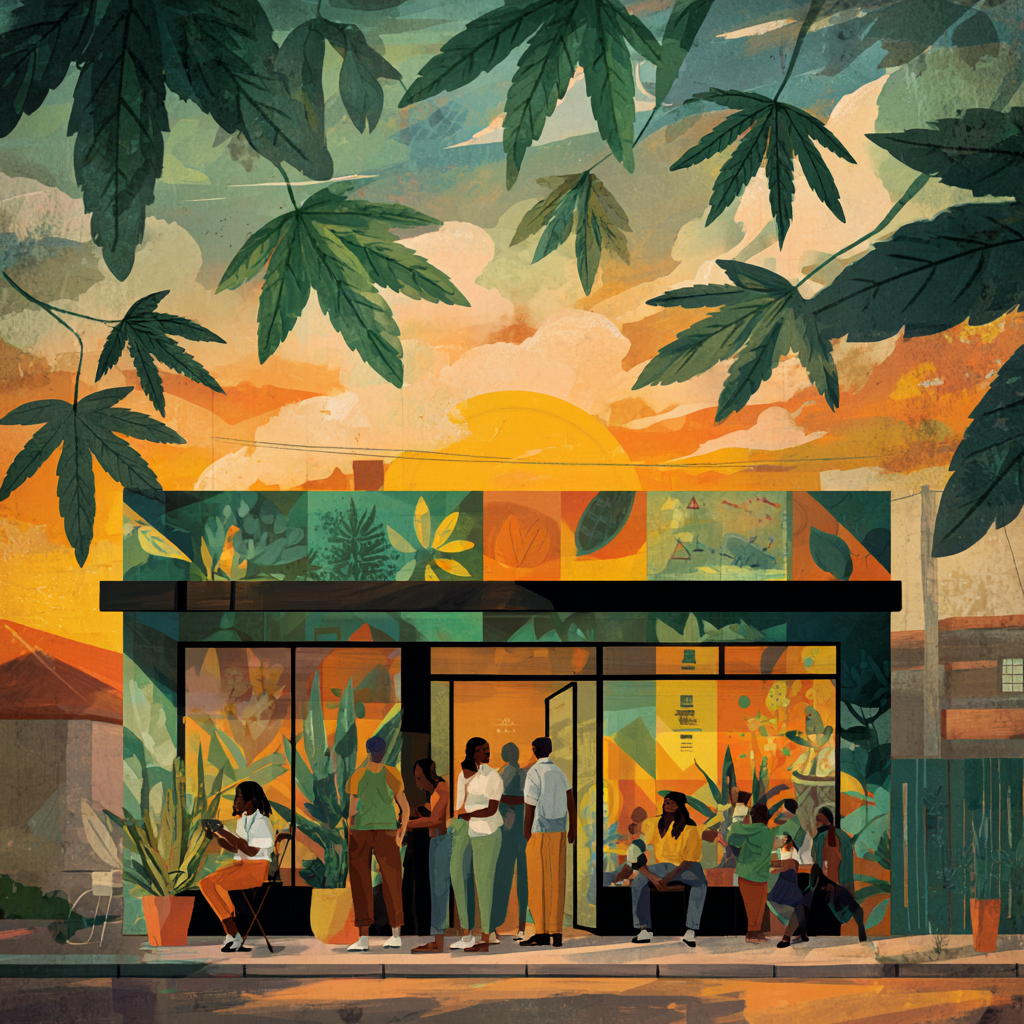
In this landscape, community spaces have emerged as critical infrastructure. Not the dispensaries themselves, but the networks, gathering places, and support systems that help social equity entrepreneurs navigate an impossibly complex process.
Incubators and accelerators have sprung up across LA, offering shared resources, mentorship, and collective power. Community organizations provide application assistance, compliance education, and connections to the few investors willing to take a chance on equity operators.
These spaces echo the mutual aid networks of an earlier era—neighbors helping neighbors, knowledge flowing through trust rather than transaction. They represent a continuation of the community bonds that sustained cannabis culture long before legalization.
The Work That Remains
Social equity in cannabis is not a finished project. It's an ongoing struggle that requires vigilance, advocacy, and sustained support.
Regulatory barriers continue to favor those with capital and connections. Enforcement still falls disproportionately on unlicensed operators, many of whom are simply trying to survive in a system that hasn't made room for them. And the promise of reinvestment—using cannabis tax revenue to repair the communities most harmed by prohibition—remains largely unfulfilled.
But there are victories, too. Social equity dispensaries have opened across Los Angeles. Community brands are finding their footing. And a new generation of cannabis entrepreneurs is emerging—one that knows its history and is determined to build something different.
A Future Rooted in Community
The history of cannabis in Los Angeles is a history of community. From the earliest cultivators to the artists who celebrated it, from the families torn apart by criminalization to the entrepreneurs fighting for their place in the legal market—this has always been about people taking care of each other.
Social equity isn't charity. It's not a handout or a favor. It's an acknowledgment that the legal cannabis industry was built on a foundation of injustice, and that true legalization means more than changing the law. It means changing who benefits.
The communities that created cannabis culture in Southern California deserve more than recognition. They deserve ownership. And with the right support, the right resources, and the right commitment to equity, that future is still within reach.
This is the third and final article in a series exploring the history of cannabis in Los Angeles and its connection to community and social equity.