
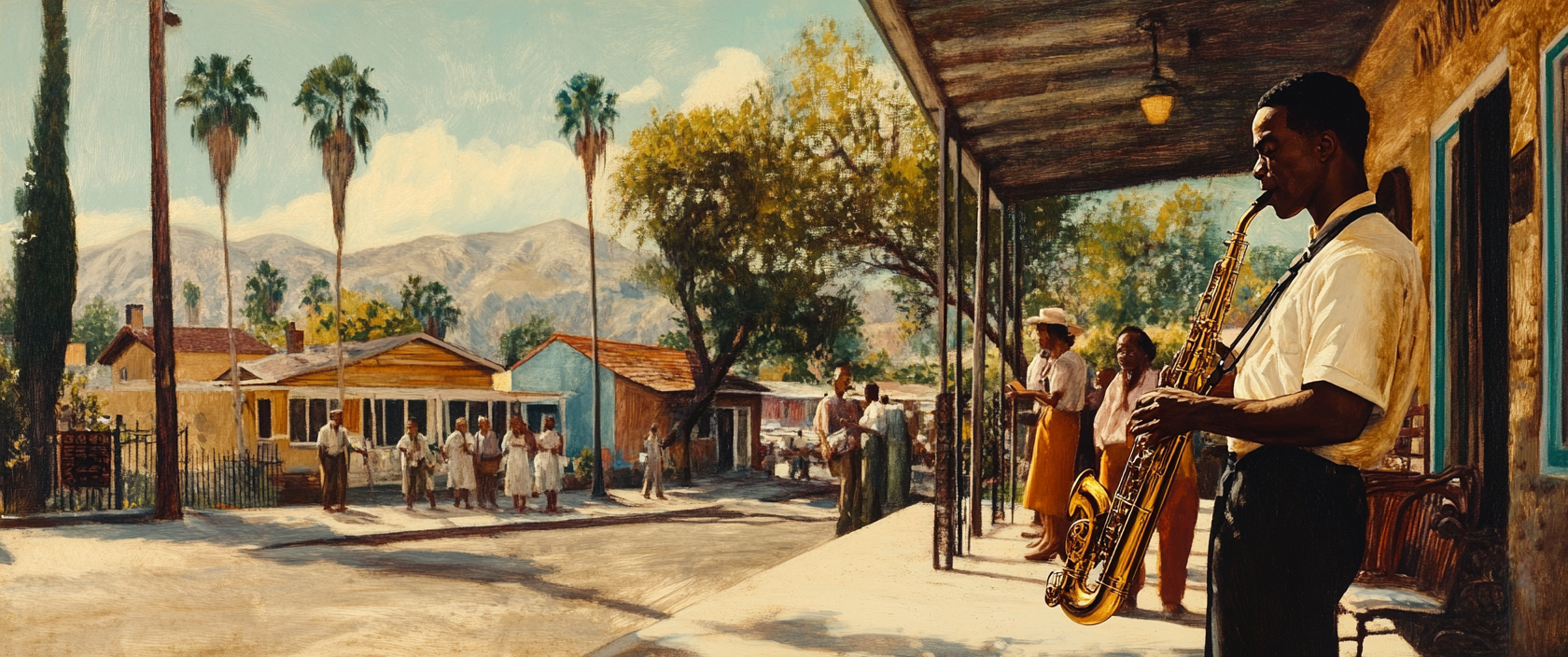
Long before dispensaries lined the boulevards of Los Angeles, cannabis was woven into the fabric of Southern California life. Its history here isn't just a story about a plant—it's a story about people, migration, culture, and community.
Early Arrivals
Cannabis first took root in Southern California in the early 20th century, arriving alongside Mexican immigrants who brought the tradition of mota northward. These workers, many of whom settled in neighborhoods like Boyle Heights, East LA, and parts of South Central, carried with them cultural practices that included the recreational and medicinal use of cannabis.
By the 1910s and 1920s, cannabis had found a home in the jazz clubs and creative spaces of Central Avenue, LA's vibrant Black cultural corridor. Musicians, artists, and writers embraced it as part of a flourishing counter-culture. The Dunbar Hotel, Club Alabam, and countless smaller venues became spaces where cannabis circulated freely among those pushing the boundaries of American art.
The California Grow
Southern California's climate—warm, sunny, and dry—proved ideal for cannabis cultivation. By the mid-century, small-scale grows dotted the hills and valleys from San Diego to Santa Barbara. In communities where economic opportunity was scarce, cannabis cultivation became a means of survival and, for some, a path to modest prosperity.
The canyons of Malibu, the backyards of Compton, the rural stretches of the Inland Empire—all became quiet participants in a growing underground economy. This wasn't the work of cartels or crime syndicates. It was neighbors, families, and community members doing what they could to get by.
Community Spaces as Safe Havens
What's often forgotten in mainstream cannabis history is the role that community spaces played. Churches, barbershops, living rooms, and neighborhood gathering spots became informal networks where knowledge was shared, products were exchanged, and people looked out for one another.
These weren't just transactions—they were relationships. The person who sold cannabis was often the same person who watched your kids, fixed your car, or helped you find work. Cannabis existed within a web of mutual aid that sustained communities long before the term "social equity" entered the legal lexicon.
A Culture Encoded
By the time the Summer of Love arrived in the 1960s, Southern California had already developed its own distinct cannabis culture—one shaped by Chicano traditions, Black artistic expression, surfer and skate subcultures, and the laid-back ethos that would come to define the region.
This wasn't borrowed from San Francisco or imported from abroad. It was homegrown, in every sense of the word. And the communities that cultivated it—often the same communities that would later bear the brunt of criminalization—deserve recognition as the true pioneers of LA's cannabis legacy.
This is the first article in a three-part series exploring the history of cannabis in Los Angeles and its connection to community and social equity. Next: how the War on Drugs devastated the very communities that built cannabis culture.